

Boutique asset managers can compete with larger investment firms by combining strong investment performance with clear positioning, thought leadership, strategic marketing, and consistent visibility among financial advisors and institutional investors. A well-defined investment story, credible online presence, effective public relations, and ongoing distribution support can help smaller firms build recognition, develop relationships, and attract assets.
Growing an investment firm is harder than it used to be. Thousands of mutual funds and ETFs are competing for the same advisors, the same headlines, and the same slice of investor attention, and that field keeps getting more crowded.
Since 2000, the number of mutual funds has generally ranged between 6,000 and 8,000. The number of ETFs has grown more than 56-fold, rom just 80 in 2000 to nearly 4,500 in 2025. For boutique firms, competing against much larger asset managers can feel daunting. But smaller firms have advantages of their own, and size alone doesn't determine their ability to compete.
Performance still matters, obviously, but it's no longer the only deciding factor. Boutique firms now have to compete for visibility just as hard as they compete for assets. That takes investment excellence paired with real marketing discipline, thought leadership, and a presence that shows up when people go looking.
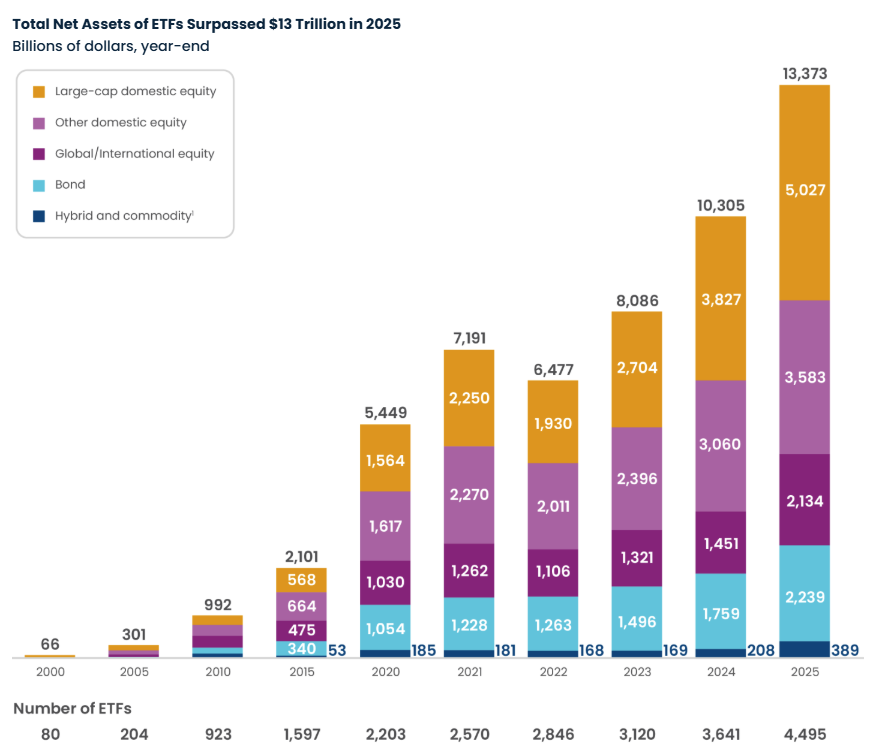
Growth in the number and net assets of U.S. ETFs, 2000–2025. Source: Investment Company Institute (ICI).
Why Is Growth More Difficult for Boutique Asset Managers Today?
Advisors are busy. Too busy, most of them would say, to properly vet every manager who wants a meeting. So they often default to names they already know, which makes it tough for a smaller firm with a genuinely strong record to get a fair shot.
The research process has also changed. Investors are doing their research and looking up firms online before they ever pick up the phone. AI search tools are starting to shape what people find when they do that lookup, and not everyone has caught up to what that means yet.
Distribution relationships still count for a lot, but visibility has become increasingly important for firms trying to break in from outside the usual networks.
A firm that doesn't show up in that research may never be considered. It doesn't matter how good the numbers are.
What Makes a Boutique Asset Manager Well Positioned for Growth?
Not every firm should be pouring money into marketing right now. Before ramping up your efforts, it's worth considering whether your firm has the resources, capacity, and commitment to support growth.
Firms that tend to be ready usually have most of the following in place:
- Competitive long-term performance relative to an appropriate benchmark
- A clearly defined investment philosophy
- An experienced, stable portfolio management team
- Capacity to accept new assets
- A story that holds up against competitors, not just a tagline
Willingness to commit to marketing and growth for years, not a quarter or two
These are the foundations of a credible growth strategy. Marketing can help communicate a firm's strengths and bring its investment story to a wider audience, but it can't make up for weaknesses in the underlying business.
Seven Strategies for Sustainable Asset Management Growth
1. Define a Clear Investment Story
What's the philosophy, and what's the process behind it? Who is this actually built for, and how is it different from the ten other firms chasing the same advisor?
Get specific about the answers, then use those same words everywhere: pitch decks, the website, fact sheets, client meetings.
The firms that struggle here usually aren't short on substance. They're just inconsistent about how they describe it, so nothing sticks.
2. Build Credibility Before You Scale
Before spending real money on marketing, look at what a prospective advisor or institutional investor finds when they check you out.
Are the materials current? Does the website reflect where the firm is today, not where it was three years ago? Are the biographies accurate?
Operational readiness belongs on this list too, because due diligence teams find gaps fast, and once they find one, they may start looking harder for others.
Getting these fundamentals in place before launching a larger marketing effort helps ensure the firm is ready for the attention it hopes to attract.
3. Make Your Firm Easy to Find Through SEO and AEO
Investors, advisors, journalists, and now AI search systems all draw from publicly available information when researching investment firms.
Search engine optimization (SEO) helps firms become more visible in traditional search results. Answer engine optimization (AEO) helps make website content easier for AI-powered search tools to understand and reference when answering questions.
If your site doesn't offer useful educational content or answers to common questions written in the language people actually search with, those questions may get answered by someone else. Or they don't get answered at all, and your firm simply doesn't come up.
A clear website, relevant investment commentary, and educational content that addresses common investor questions can help prospective clients find your firm and understand what makes it different.
4. Invest in Thought Leadership
Articles. White papers. Market commentary. Podcasts, webinars, conference panels, a LinkedIn presence that isn't just reposted press releases.
Pick a few of these and commit, rather than trying to do all of them halfheartedly.
Portfolio managers have perspectives that advisors and investors may find valuable, particularly when they explain market developments, investment risks, or the thinking behind their strategies.
The point is to teach something, not to pitch. Advisors can tell the difference within a paragraph.
5. Earn Third-Party Credibility Through Public Relations
A media interview or recognition from a respected industry organization can provide something self-published content can't: an opportunity for others to recognize a firm's expertise or accomplishments.
That's a different kind of credibility than anything a firm can say about itself, and it's worth pursuing even when it takes longer to land than a press release does.
Financial journalists are looking for informed perspectives on markets, economic developments, and investment trends. Boutique portfolio managers with specialized expertise can be valuable sources, even if their firms aren't household names. Building relationships with journalists and contributing useful commentary can help bring that expertise to audiences the firm might not otherwise reach.
6. Support Distribution with Consistent Marketing
Quarterly conference calls used to be the whole playbook. Now it's ongoing advisor communication, relevant email campaigns, educational webinars, sales materials that sales teams will actually use, and digital campaigns that keep showing up.
Follow-up still matters more than firms want it to. Advisors often need multiple opportunities to become familiar with a manager before they're ready to seriously consider an investment strategy.
Marketing helps keep those conversations going between meetings, giving distribution teams something useful to share rather than another sales pitch.
7. Keep Every Client Touchpoint Current
Getting your marketing materials in order before a growth initiative is one thing. Keeping everything accurate and consistent as the firm evolves is another.
It used to be enough to keep the fact sheet updated. Now that list includes the website, commentary, social presence, bios, FAQs, presentation decks, and performance updates, and all of it needs to stay current at the same time.
Stale or inconsistent information in any one of those places can raise questions during an advisor's research or due diligence process.
Keeping materials current also helps ensure that search engines, AI tools, and prospective investors have access to accurate information about the firm.
Why Marketing Is No Longer Optional for Boutique Asset Managers
Marketing supports distribution. It reinforces credibility. It helps advisors understand an investment approach instead of guessing at it from a fact sheet.
It also helps firms show up in traditional search results and AI-generated answers, which is a newer version of an old problem: being good isn't the same as being found.
That doesn't mean every firm needs a large marketing budget or should pursue every available channel. For smaller asset managers competing against firms with much greater resources, consistency, a well-defined message, and a focus on educating rather than simply promoting can be more valuable than trying to be everywhere at once.
Frequently Asked Questions About Growing an Asset Management Firm
Is investment performance enough to grow an asset management firm?
Not anymore, and it probably never fully was. A great track record that nobody knows about doesn't automatically convert into assets. Someone still has to find it, understand it, and trust it enough to act. Marketing, distribution, and credibility all play a role in that process.
How can a boutique asset manager compete with larger firms?
Smaller firms don't have to match the marketing budgets of larger competitors. They can compete by being sharper about who they're for and more focused on the one or two things that genuinely set them apart, rather than trying to check every box a larger competitor checks. Specialized expertise, clear positioning, and consistent communication can help level the playing field.
What marketing strategies work best for investment firms?
There's rarely one silver bullet. A clear investment story, thought leadership, earned media, a search-optimized website, and steady advisor communication tend to work together better than any single tactic run in isolation. The right mix depends on the firm's target audience, investment strategies, and growth objectives.
Why is thought leadership important for portfolio managers?
Because it helps establish credibility before a sales conversation ever happens. Advisors who regularly encounter a manager's commentary or market perspectives have an opportunity to become familiar with that manager's thinking before considering an investment.
How can public relations help boutique asset managers grow?
Public relations helps introduce portfolio managers and their investment perspectives to audiences beyond their existing distribution networks. Media interviews, contributed commentary, and industry coverage can increase awareness, reinforce credibility, and create opportunities for prospective investors to learn more about a firm.
How does AI search affect asset management marketing?
AI search tools can answer questions about investment firms using publicly available information. If a firm's website content is thin, outdated, or difficult to interpret, those tools may have less useful information to draw from. Clear investment strategy descriptions, educational content, and FAQs can help make a firm's expertise easier to discover and understand.
What is the difference between SEO and AEO for investment firms?
SEO focuses on helping websites appear in traditional search engine results. AEO focuses on structuring information so AI-powered search tools can more easily understand and use it when generating answers. Both rely on relevant, accurate, well-organized content, and both can contribute to an asset manager's online visibility.
What should a boutique asset manager prioritize first?
The story and the materials, before the visibility push. Driving more traffic to a website that isn't ready just means more people find the gaps sooner. Start with clear positioning, accurate information, and a consistent investment message, then build the marketing program around those strengths.
The Bottom Line for Boutique Asset Managers
Growth rarely happens because investors stumble onto a great fund on their own. It happens when strong investment management gets paired with clear positioning, steady communication, and sustained visibility.
Boutique firms that invest in both the investment process and the marketing around it are better positioned to build credibility, strengthen distribution relationships, and compete in a market that isn't getting any less crowded.